
You don't need more kick-up attempts. You need a path.
A structured, follow-along program that takes you from the floor to a confident wall handstand.
Four clear milestones
20 to 40 minutes a session
At home, no gym and no gymnastics background needed
“I was a total beginner, but Beambod gave me the structure and support to finally nail my first handstand. The community is amazing too!”

“I love that I can train anywhere and at my own pace. The step-by-step progressions make even the toughest skills feel achievable!”

“The easy to follow videos make it clear what you need to do, and they are great for staying consistent. Highly recommend!”

“Beam bod makes working out at home super easy. Clear instructions and it's perfect for fitting into my busy days, especially with kids.”

“I’ve tried a lot of fitness programs, but nothing compares to Beambod. It challenges me, keeps me motivated, and I actually look forward to training!”

“Training with Beambod has completely transformed my body and mindset. It’s more than just workouts—it’s a whole new way of moving and feeling strong.”

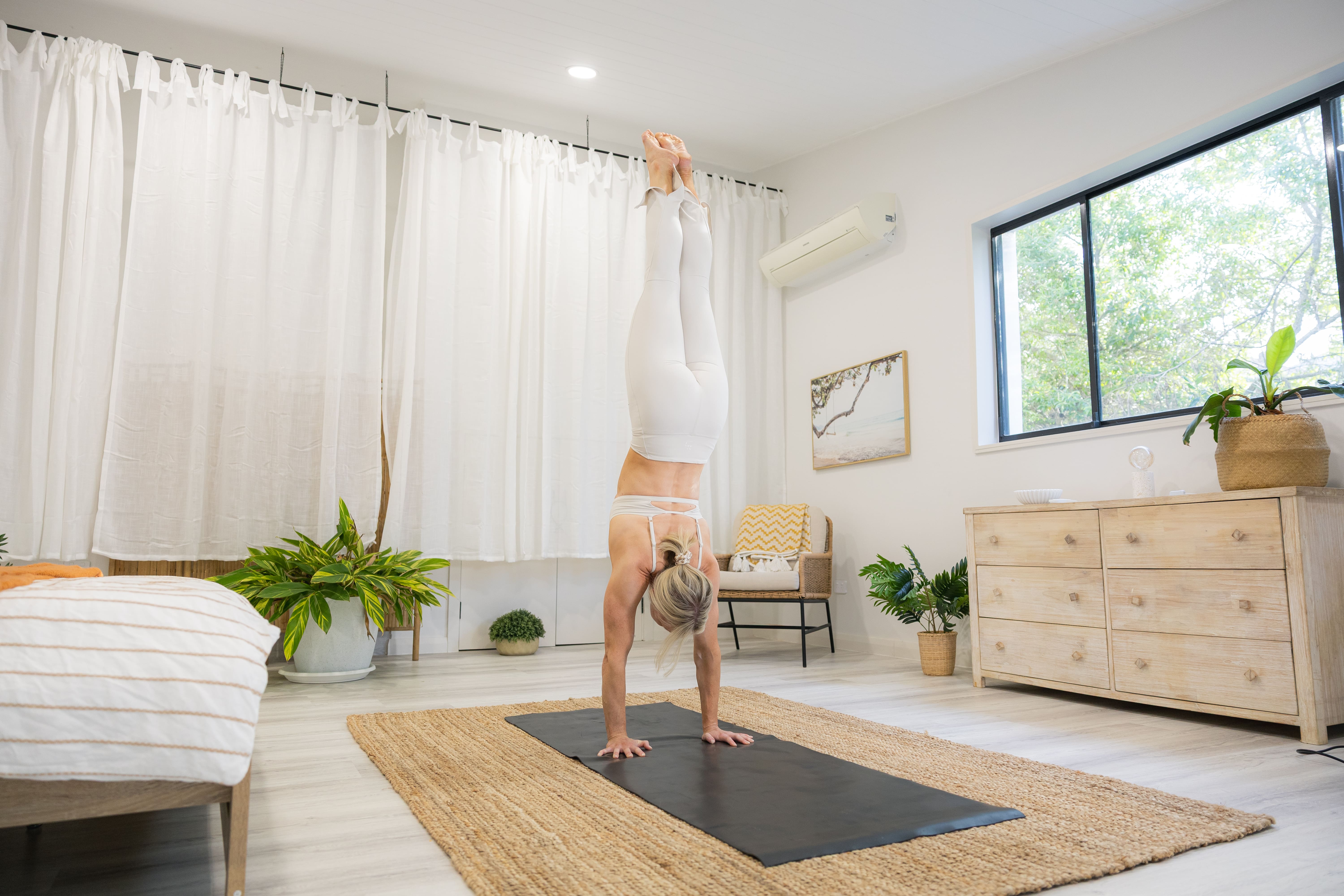


Kicking up at a wall isn't a plan.
Most people learning handstands do the same thing. They find a few videos, kick up at a wall, hold on for as long as they can, and hope it gets easier. Some days feel good. Most days feel like nothing is happening.
If you already train, it's more frustrating again. You've built real strength through Pilates, yoga or the gym. You're fitter than most people you know. And yet this one thing refuses to click.
The problem isn't effort or fitness. It's that kicking up is only half the picture. Your wrists need conditioning before they can carry you. Your shoulders need to learn to flex and elevate. And balance,the part everyone actually wants, comes from your hands and forearms, which is a skill you have to train deliberately.
Without a structure that builds those three things in the right order, you're not getting closer to a handstand. You're just getting tired.

All you need to do is show up and press play.
You can find a list of handstand exercises anywhere. What's hard is knowing what to do today, how to do it properly, and when you're ready to move on. That's what you're buying.
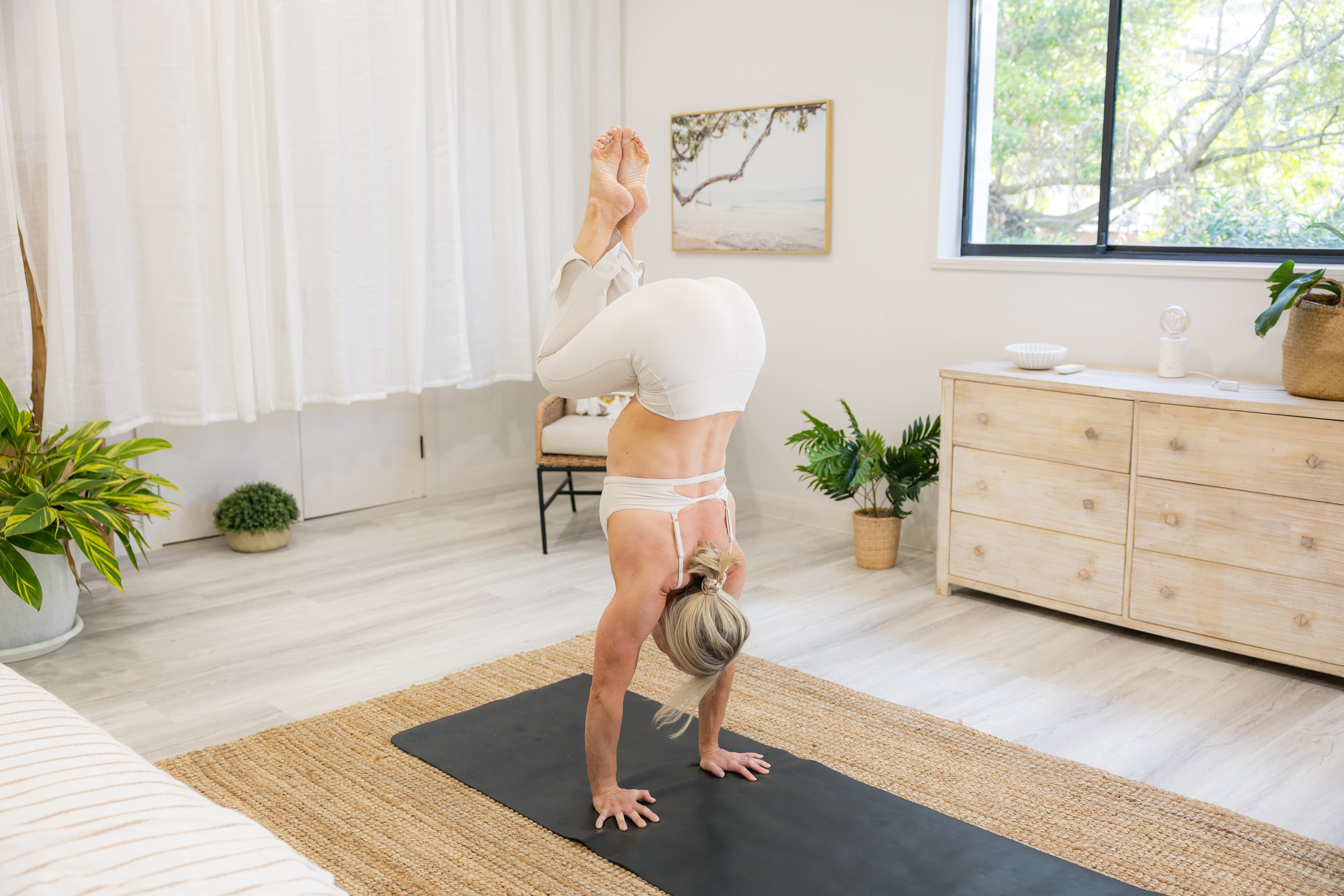
A structured, progressive program
Every session laid out in order, from your first wall hold through to real balance. No deciding what to do today, no guessing whether you're ready for the next step.

Follow-along video coaching per exercise
Kat and Ev talking you through the technique, the common mistakes and the drills. You press play and train, the same way you would in a class.

Flexibility & mobility training included
Alternate day upper and lower body work, so the mobility you need arrives before you need it rather than after you've hit a wall.

Yours to keep - access for 12 months
12 months access. At home or wherever you train. Come back to any milestone as often as you need.
Four milestones. Here's what's inside each one.
Handstands aren't one big leap. They're a series of small, winnable steps, each one building on the last. Getting your first three second hold matters just as much as your first thirty.
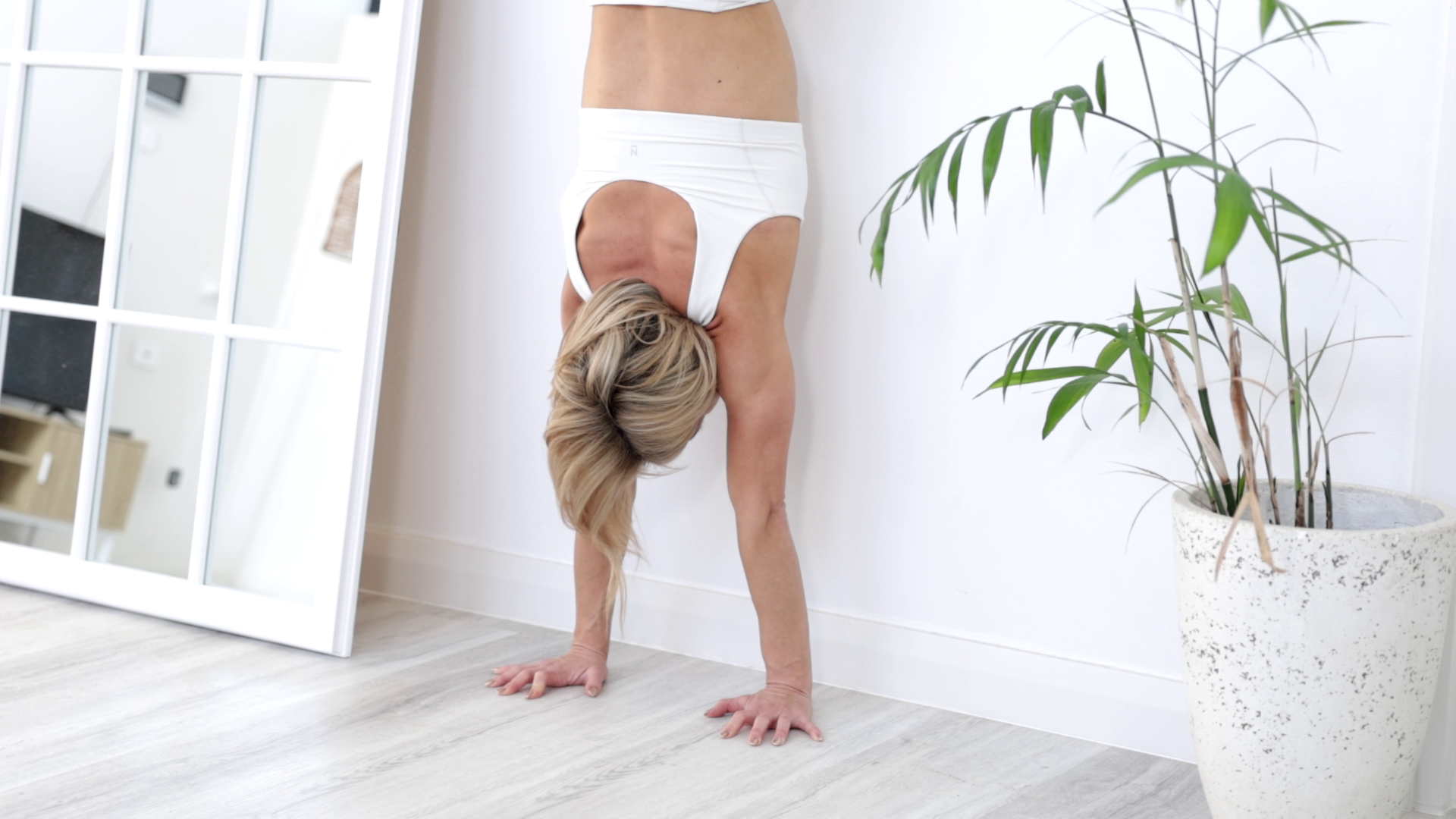
1. Chest To Wall
Your first real handstand shape. You'll learn the position itself before adding any difficulty, then build through plank on hands, pike and decline holds until a 30 second chest to wall hold feels steady.
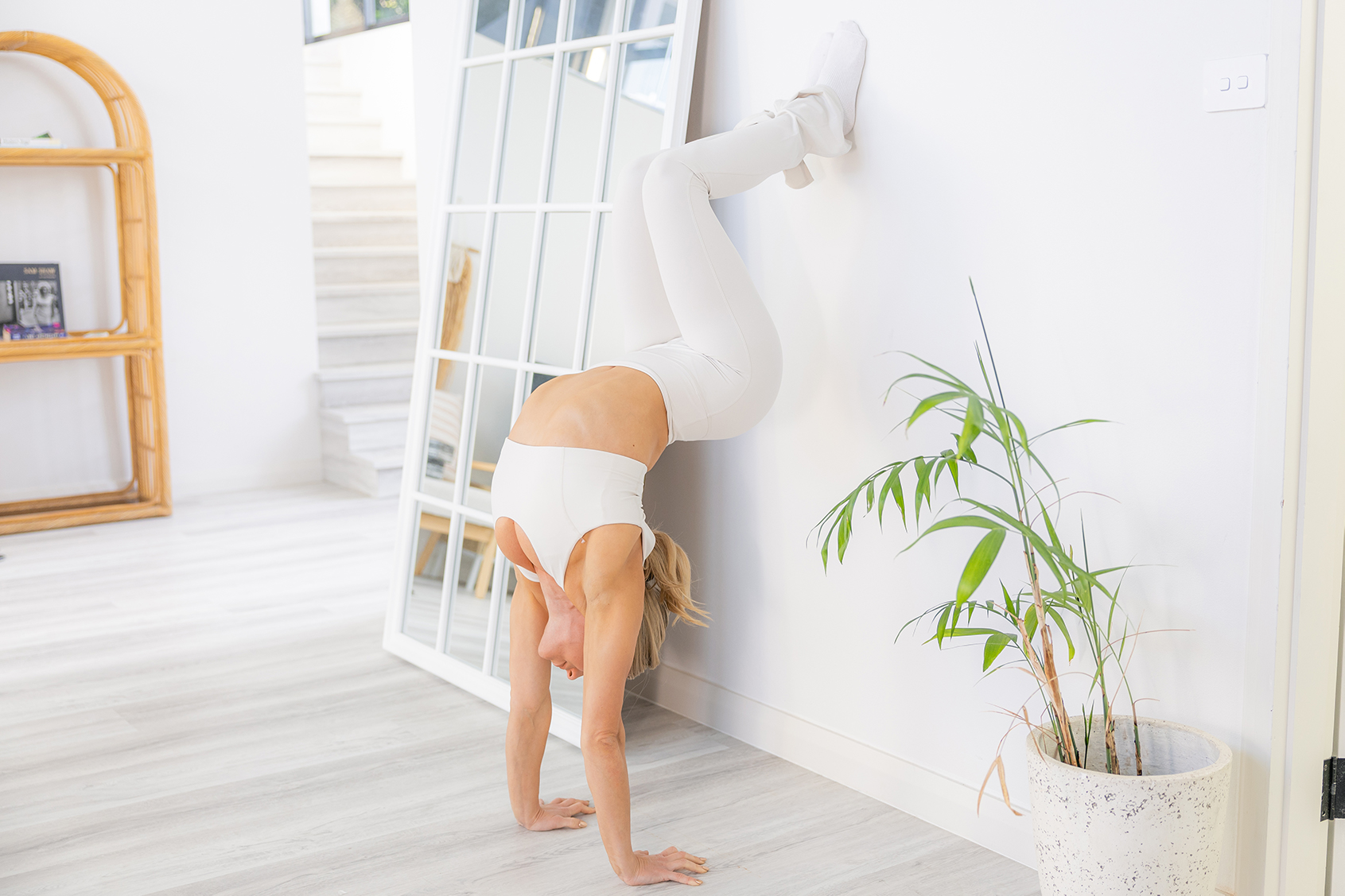
2. Back To Wall
Getting up, then getting up with control. You'll start with a donkey kick and finish kicking up slowly without touching the wall at all

3. Cartwheel Exit
The safe, confident way down. You'll practise the exit from an easier decline setup first, then straight out of your handstand. This is the milestone that takes the fear out of the whole thing
4. Balance
Real control. Cluster sets build into five second pulls, then ten, until you're holding your own weight rather than leaning on the wall.
Is this you?
We want great handstands & happy customers, not just sales. Find out whether the Beambod Handstand Roadmap is right for you or not.


The same two coaches, start to finish.
Kat and Ev Dalecki are qualified gymnastics coaches and the owners of Dalecki Strength. They've spent years coaching adults who came to gymnastics late, at every level from first wall hold to competitive skills, and the Roadmap is the exact progression they use.
You'll see them in every video. No rotating cast, no narrator, no faceless app.

They started where you are.
One payment. That's it.
One-off. No subscription, no recurring charges, nothing to cancel.
That's four months of a Beambod membership, except this lasts for 12 months and there's nothing to remember to cancel.
You're buying the Handstand Roadmap, not a membership. There's no trial that quietly turns into a monthly bill and no date in your calendar to watch. Pay once, work through the four milestones at your own pace, and come back to it whenever you need.
Questions, answered.
Because free videos give you exercises, not a progression. You end up with a folder of drills and no idea which one you should be doing today, or whether you're ready for the next thing. The Roadmap is the order, the pacing and the coaching cues that turn those exercises into a handstand, built by coaches who do this for a living.
No. Adults learn handstands all the time, and most of our students came to this late. What matters is building wrist and shoulder strength in the right order rather than throwing yourself at a wall, which is exactly what the Roadmap is built to do.
Probably not, and here's why. Pilates builds excellent core control and body awareness, which gives you a real head start. What it doesn't build is wrist loading, overhead shoulder position and the specific balance skill that happens in your hands. The early milestones will move quickly for you. The later ones won't.
Milestone one doesn't involve kick up in the middle of the room. You'll build the shape and the strength first, on the floor and against the wall, and the kick up comes once your body is ready for it.
Minimal equipment is needed like yoga blocks and mat that you can buy at Kmart.
Most people reach their first 30 second chest to wall hold in around 12 weeks training 4 days aweek. Sessions run 20 to 40 minutes. Because the program is built around milestones rather than a fixed calendar, you move on when you're ready rather than when a schedule tells you to.
No. It's a single $120 payment and the program is yours. There's no monthly charge and nothing to cancel.